The Complete 2026 Data Science Roadmap for Mastering AI Agents era
The 2026 Data Science Roadmap is your guide to evolving from a coder into an AI Architect and mastering AI agents. AI agents are now performing tasks that used to require human Data Scientists, making it essential to learn how to design and orchestrate them effectively.
If you’re still following outdated guides from 2023 or 2024, it’s time for a reality check: the job market has changed, and the skills that got you hired two years ago won’t cut it in 2026.
The Data Scientist who only writes SQL or cleans spreadsheets is being outpaced, by AI agents.
But here’s the good news: this is the highest-leverage era for data careers. If you stop thinking like a coder and start thinking like an AI Architect, you can become indispensable.
This 2026 Data science roadmap reflects what companies are actually hiring for today, and it will set you up for success in the coming years.
1. The Automation Wake-Up Call
Let’s get real: coding is becoming a commodity.
Ask an AI to generate a Python script to clean a dataset and train a model, it will do it faster, cleaner, and error-free.
If your only value is writing lines of code, your leverage in the market is disappearing.
Companies don’t pay for scripts anymore. They pay for systems. Systems where AI agents collect data, validate it, analyze it, and even generate insights, without human intervention.
Your goal in 2026: stop thinking micro (coding) and start thinking macro (system design). Modern data teams will look like this:
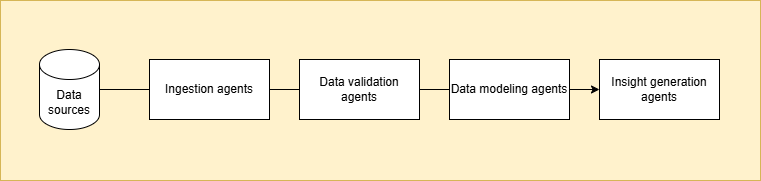
You should design the pipelines and own the pipeline and not manually running pieces of it.
2. The New Fundamentals
Data Science in 2026 isn’t just Python and SQL, it’s about whwther you can debug, validate, anc control AI-generated code.
Here’s what matters now:
Python & SQL: Still required, but the focus is on logic, problem-solving, and debugging AI outputs, not memorizing libraries.
Vector Databases & RAG (Retrieval-Augmented Generation): Connect messy company data to LLMs using tools like Pinecone or OpenSearch. Every serious AI product now has:
- A vector store
- Embeddings
- Chunking strategies
- Re-ranking
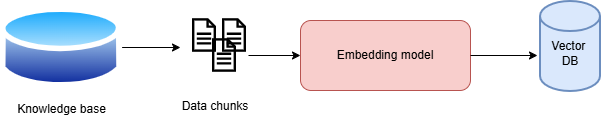
You are building domain-specific knowledge engines.
Evaluation and control
The most valuable skill in 2026 is knowing when the AI is wrong.
That means:
- Golden datasets
- Offline evals
- Prompt & agent testing
- Drift detection
- Human-in-the-loop design
3. The 2026 Tech Stack
Pandas and Scikit-learn alone won’t get you interviews anymore. To stand out, you need the Agentic Stack:
Orchestration: You don't write scripts anymore, you design agents workflows. You have to master at least LangGraph or CrewAI to design multi-agent workflows.
Models: Stop relying solely on APIs. Depends on the company strategy you can rely both on external LLMs such as OpenAI or Anthropic, but also local models. Using local models such as Llama 3 or Mistral is beneficial for companies who are seeking privacy and cost-efficiency. You should be able to understand when and how to use various models.
Memory & Observability: Withou observability, agents are dangerous. Track agents’ reasoning and context using Mem0 or LangSmith. Transparent, reliable AI systems are the only ones companies will trust in production.
You should understand:
- Tracing (LangSmith, Helicone)
- Vector memory vs structured memory
- Session vs long-term memory
- Feedback loops
Master these, and you move from coder to Agentic Data Scientist.
4. The execution Layer: Automation
In 2026, every serious Data Science system has three layers:
Models -> Agents -> Automation
Most people stop at creation of agents, while the value is connection with real world cases.
You must be comfortable connecting agents to:
- Slack
- CRMs (Salesforce, HubSpot)
- Ticketing systems (Jira, Zendesk)
- BI tools
- Databases
- Internal APIs
- Cloud infrastructure
Using tools like:
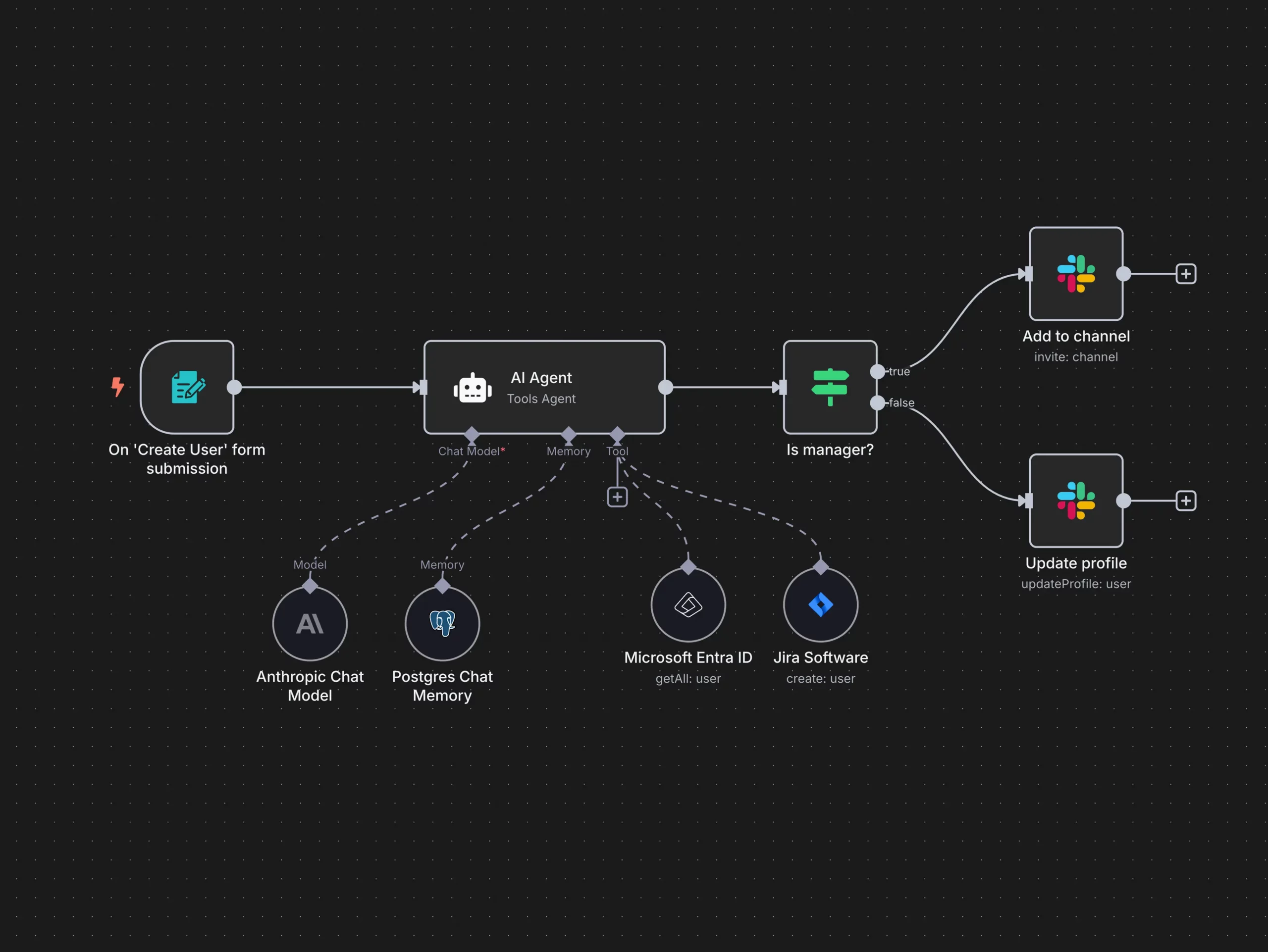
n8n is an efficient tool for workflow automation
Your job is no longer to produce insights, it is to design systems where insights automatically become actions.
5. Build a Portfolio That Lives
Static Jupyter Notebooks won’t impress anyone. Your portfolio needs to demonstrate autonomy.
Think projects like:
- A market research agent that scrapes competitor data, analyzes trends, and updates a dashboard daily.
- A fully automated recommendation system that runs without manual input.
- A financial forecasting agent with real evaluation metrics
- A competitive intelligence agent that scrapes, summarizes, and alerts sales
Deploy your projects to Streamlit or Vercel. If a recruiter can’t interact with it via a link, it’s invisible.
Each project shouold include:
- Architecture diagram
- Data flow
- Evaluation method
- Cost per run
- Failure modes
That is what hiring managers want to see.
6. The Real Career Bet
In 2026, the most valuable people are not Prompt engineers, Kaggle champions or Dashboard builders.
They are people who can turn business goals into autonomous, trustworthy AI systems. That is the AI Architect.
And Data Scientists are perfectly positioned to become them, if they stop following to the old identity of "the person who writes code."
The Call to Action
AI won't replace Data scientist.
Data Scientists who refuse to become system designers will be replaced by AI-powered Data Scientists who do.
This roadmap is not about tools. It is about changing how you think about your role.
To make this transition, you need a roadmap, not just ambition. That’s why I created a 1-page 2026 Data Science Roadmap Checklist, covering every skill, tool, and project idea discussed here. Download it, follow it, and start building your Agentic Data Science portfolio today.
The future of Data Science isn’t about typing code, it’s about building intelligence that works for you and your organization. The choice is simple: evolve, or risk being replaced.
Your career in 2026 will depend on the actions you take right now. So ask yourself: are you ready to lead the Agentic Era, or will you let it pass you by?
